Tag: Arizona Real Estate

  • Off-Market vs. On-Market Listing: Which Is Better?

    Off-Market vs. On-Market Listing: Which Is Better?

    The debate over off-market vs. on-market listings has taken center stage in the real estate industry. Major companies, including Compass and Zillow, have publicly disagreed over when, where, and how homes should be marketed.

    Although industry policies continue to evolve, sellers should remain focused on a much more important question:

    Which marketing strategy will best support your personal and financial goals?

    How broadly your property is exposed can directly affect buyer demand, negotiating leverage, contract terms, and ultimately your net proceeds. For most sellers, the decision comes down to one central consideration:

    Is your priority maximizing your sale price, or do your circumstances require you to place greater value on privacy, convenience, or control?

    What Is an On-Market Listing?

    An on-market property is generally listed in the Multiple Listing Service, commonly called the MLS, and marketed broadly to the real estate community.

    The listing can then be distributed through MLS-connected websites and major consumer home-search platforms such as Zillow, Realtor.com, and Redfin, depending on the seller’s instructions and applicable MLS settings.

    This approach gives the property access to the widest available pool of buyers and buyer representatives. The objective is to generate maximum awareness, create competition, and give the market an opportunity to determine the property’s value.

    What Is an Off-Market Listing?

    “Off-market” does not refer to one specific marketing method. It encompasses a range of strategies with varying levels of exposure.

    An off-market strategy may include:

    • Private marketing within an agent’s or brokerage’s internal network
    • A “coming soon” or pre-market period before the listing becomes fully active
    • Direct outreach to specific qualified buyers or real estate agents
    • An office-exclusive listing shared only within one brokerage
    • A traditional pocket listing with extremely limited visibility

    Some sellers are not choosing to remain off-market indefinitely. Instead, they may use a controlled pre-market period before launching the property to the broader market.

    That distinction matters. A limited pre-market strategy can serve a legitimate purpose, but it should be used intentionally, not simply because it is convenient for the brokerage or listing agent.

    When an Off-Market Strategy May Help

    Privacy or Security Is a Genuine Priority

    Some sellers have valid reasons for limiting public exposure. These may include personal safety, security concerns, sensitive family circumstances, divorce, illness, a high-profile occupation, or a desire to keep interior photos off public websites.

    Other sellers simply want fewer people viewing their home online or walking through it in person.

    In these situations, the benefits of privacy may outweigh the potential financial advantages of broader exposure.

    You Need Greater Control Over Timing

    A private or pre-market period may be helpful when the home is not quite ready for a full public launch.

    For example, you may be:

    • Completing repairs or renovations
    • Waiting for staging or professional photography
    • Coordinating travel or an upcoming move
    • Working around children, pets, or tenants
    • Preparing another property for purchase
    • Managing a sensitive transition

    A carefully structured private-first strategy can reduce disruption while allowing an agent to begin identifying potential buyers.

    You Want Early Feedback Before a Full Launch

    A limited pre-market period may provide an opportunity to collect early feedback about pricing, condition, presentation, and buyer interest.

    It may also allow the seller to gauge demand before the property begins accumulating publicly visible market history.

    However, early feedback must be interpreted carefully. A small private audience does not necessarily represent the broader market, and limited interest during a private phase does not automatically mean the property is overpriced.

    Your Agent Has a Demonstrable Buyer Pool

    An off-market strategy may be effective when the listing agent can identify a credible group of qualified buyers whose needs align with the property.

    There is an important difference between an agent vaguely claiming, “I may know someone,” and an agent presenting a documented outreach strategy involving financially qualified buyers and cooperating agents.

    The seller should understand:

    • How many prospective buyers will be contacted
    • How those buyers were identified
    • Whether they are financially qualified
    • How buyer feedback will be collected
    • How long the private phase will last
    • What will trigger a transition to the open market

    Without a clear plan, a private listing can become an extended period of limited exposure without providing a meaningful benefit to the seller.

    When an Off-Market Strategy May Cost You

    Reduced Exposure Can Reduce Competition

    Competition is one of the strongest tools a seller has.

    When more qualified buyers know about a property, the seller has a better opportunity to receive:

    • A higher purchase price
    • Multiple offers
    • Stronger earnest money
    • Fewer inspection demands
    • More favorable appraisal terms
    • A preferred closing timeline
    • A post-possession or rent-back agreement
    • Greater leverage during negotiations

    An off-market offer may appear attractive when viewed in isolation. The problem is that the seller may never know whether another buyer would have paid more or offered better terms.

    Broad exposure does not guarantee multiple offers or an above-list sale. It does, however, give the market a more complete opportunity to respond.

    Limited Marketing Can Weaken Price Discovery

    Price discovery is the process of determining what buyers are genuinely willing to pay for a property.

    A full-market launch creates several useful data points, including:

    • Showing activity
    • Online views and saves
    • Buyer inquiries
    • Second-showing requests
    • Open-house attendance
    • Feedback from buyer representatives
    • Offer volume and quality

    Together, these signals help a seller determine whether the property is positioned correctly.

    Feedback from a small private audience can be useful, but it can also be misleading because the sample size is limited. A handful of buyers may not accurately represent how the broader market will respond.

    The Buyer May Have More Leverage

    When a buyer knows that few other people have seen the property, there may be less urgency to submit a strong offer.

    The buyer may assume there is limited competition and attempt to negotiate more aggressively on price, repairs, concessions, financing terms, or the closing timeline.

    Even when an off-market offer seems convenient, sellers should evaluate whether that convenience comes at the expense of negotiating leverage.

    The Strategy May Benefit the Brokerage More Than the Seller

    Private inventory can be valuable to a real estate company because it attracts buyers, creates recruiting opportunities, and keeps more transactions within the same brokerage.

    That does not automatically mean a private strategy is wrong. It does mean the seller should ask whether the recommendation is primarily designed to advance the seller’s interests.

    A marketing strategy should be selected because it supports the homeowner’s goals, not because it benefits a particular agent, brokerage, website, or business model.

    Questions Sellers Should Ask Before Going Off-Market

    Before agreeing to limited exposure, ask your agent:

    1. Why are you recommending an off-market strategy for my property?
    2. How many qualified buyers will have access to the listing?
    3. Will agents outside your brokerage be able to find it?
    4. Where will the property appear online, if anywhere?
    5. How long will the private marketing period last?
    6. How will we determine whether the strategy is working?
    7. What information or market history will become publicly visible?
    8. What is the plan if we do not receive an acceptable offer?
    9. How could limited exposure affect my sale price and contract terms?
    10. How does this strategy benefit me rather than the brokerage?

    A knowledgeable agent should be able to answer these questions directly and explain both the benefits and the potential tradeoffs.

    The Bottom Line

    An off-market listing can be a useful strategic tool when privacy, security, timing, or convenience is more important than achieving the greatest possible market exposure.

    However, broad on-market exposure remains the most reliable way to reach the largest buyer pool, encourage competition, establish market value, and preserve negotiating leverage.

    Neither strategy is automatically right for every seller.

    The best approach depends on:

    • Your desired level of privacy
    • Your timing and moving plans
    • The condition and readiness of the property
    • The depth of the available buyer pool
    • Current market conditions
    • Your tolerance for showings and public exposure
    • Your financial priorities

    If you are considering selling your home and would like a clear, no-pressure recommendation, schedule a consultation. I will walk you through your options and create a launch strategy based on your property, timeline, and financial goals.

    Frequently Asked Questions

    Do Off-Market Homes Sell for Less?

    Not necessarily. An off-market home can receive a strong offer, particularly when the property is unique or the agent has access to a qualified buyer who is willing to pay a premium.

    However, with limited exposure, the seller has less information about what the broader market might have offered. This makes it more difficult to confirm whether the seller received the highest attainable price and best available terms.

    Does a Coming-Soon Listing Count as Off-Market?

    It depends on how the listing is entered and marketed.

    Some MLS systems offer an approved coming-soon status that allows limited promotion before showings begin. A property marketed only through a private brokerage network may operate differently. The applicable rules depend on the local MLS and the specific marketing methods being used.

    Can I Try Selling Privately Before Listing on the MLS?

    In some circumstances, yes. A seller may authorize a limited private-marketing period before the property is introduced to the broader market.

    The agreement should clearly define the duration, intended audience, pricing strategy, permitted marketing, and conditions that will trigger the full public launch. Public promotion may also activate MLS submission requirements, so the strategy must comply with applicable local rules.

    Will My Home Accumulate Days on Market During a Private Phase?

    A property marketed exclusively outside the MLS will not accumulate official MLS days on market during that period. This also applies to properties marketed as a Coming-Soon listing entered in the MLS.

    Is an Off-Market Listing More Private?

    It can be, but “off-market” does not always mean confidential.

    The property may still be shared with buyers, real estate agents, brokerage networks, vendors, photographers, or selected websites. Sellers who require discretion should ask exactly who will receive the property information, whether photos will be used, and whether the listing can be forwarded or redistributed.

    Is On-Market Usually the Best Choice for Maximizing Price?

    For most sellers focused primarily on achieving the highest price and strongest terms, broad market exposure generally provides the best opportunity to create competition.

    There may be exceptions, but sellers should approach claims of a guaranteed off-market advantage carefully. No agent can know with certainty what the entire market would pay without exposing the property to that market.

    About Krista Becka

    Krista Becka is a Broker Associate with Real Broker who helps buyers and sellers throughout Scottsdale, Paradise Valley, Arcadia, Phoenix, and surrounding communities make informed real estate decisions. With nearly two decades of experience, she specializes in luxury homes, relocation, move-up buyers and sellers, and strategic pricing. As a Certified Luxury Home Specialist (CLHMS), REAL Luxury member, and Certified Negotiation Expert (CNE), Krista combines data-driven analysis with concierge-level service to help clients maximize their results.

    Schedule a consultation at kristabecka.com/contact


  • Home Isn’t Selling? Here’s When to Lower the Price, Hold, or Relist

    Home Isn’t Selling? Here’s When to Lower the Price, Hold, or Relist

    If your home isn’t selling, you’re not alone. One of the most common questions homeowners ask is whether they should lower the price, hold steady, or take the home off the market and relist.

    The answer depends on far more than the number of days your home has been listed. Showing activity, buyer feedback, market conditions, and pricing strategy all provide valuable clues about the best next step. Before making a decision, it’s important to understand what the market is actually telling you.

    Why Your Home Isn’t Selling: Start With Your Showing Activity

    Before you adjust the price, look at your activity over the past three weeks. In most cases, your showing history will point you toward the right strategy.

    Few or No Showings

    If buyers aren’t scheduling showings, your asking price is usually the biggest obstacle. Buyers are filtering your home out before they ever walk through the front door. If your property isn’t appearing in the price range where buyers are searching, they won’t have the opportunity to appreciate its features.

    Plenty of Showings, But No Offers

    If buyers are touring the home but nobody is making an offer, your price may be close. However, something else is causing buyers to choose another property. That could be condition, outdated finishes, photography, staging, or simply how your home compares with the other homes they viewed the same day.

    Low Offers

    If you’re consistently receiving offers well below your asking price, the market is giving you valuable feedback. The question becomes whether you’re willing to adjust your expectations or continue waiting for a buyer willing to pay your current price.

    Why Days on Market Matter

    If your home isn’t selling after about 45 days, buyers begin looking at it differently.

    Early in a listing, buyers ask themselves, “What do I think of this house?” As the days on market increase, the conversation changes to “I wonder what the seller would actually take?”

    Time itself becomes leverage for buyers. Every additional week without meaningful changes can weaken your negotiating position and increase the discount buyers expect to receive.

    When Should You Lower the Price?

    A price reduction makes sense when showing activity is low and your direct competition is attracting buyers.

    However, a price reduction only works if it’s meaningful.

    For example, reducing a $1.4 million listing by $25,000 rarely changes buyer behavior. It doesn’t move your home into a new online search bracket or trigger a meaningful wave of new listing alerts. Instead, it often signals to buyers that additional reductions may be coming.

    In many situations, a strategic reduction of 3–5%, or enough to reach the next common search price, generates far more attention than a series of small cuts.

    When Should You Relist Your Home?

    Sometimes your home isn’t selling because the listing has become stale rather than because the property itself is undesirable.

    If showing activity has slowed dramatically, you’ve completed improvements, updated the staging, or changed your pricing strategy, removing the home from the market and relaunching it may be the better option.

    In Arizona, a home must remain in Canceled or Expired status for more than 45 consecutive days before it can be relisted as a new MLS listing. Beginning on the 46th day, both Agent Days on Market (ADOM) and Cumulative Days on Market (CDOM) reset to zero.

    A successful relaunch is more than simply resetting the days on market. Use the time to:

    • Invest in new professional photography
    • Complete deferred maintenance and repairs
    • Improve staging and curb appeal
    • Reevaluate your pricing strategy
    • Build a fresh marketing campaign

    When those improvements accompany a new listing, they can generate renewed buyer interest and create a stronger first impression.

    When Does It Make Sense to Hold?

    Holding your price isn’t always the wrong decision.

    If your home is truly unique, patience can be a legitimate strategy.

    Luxury estates, custom homes, architecturally distinctive properties, or homes on large lots often appeal to a much smaller buyer pool. These properties naturally require more time to find the right buyer.

    If your property doesn’t fit neatly into a group of comparable sales, waiting may produce a better outcome than reducing the price too quickly as long as your carrying costs and timeline allow for it.

    Quick Decision Guide

    If you’re experiencing…Consider…
    Very few showingsReview your pricing strategy.
    Lots of showings but no offersImprove presentation, photography, staging, or pricing.
    Repeated low offersReevaluate your asking price based on market feedback.
    A stale listing with declining activityConsider relisting after improving the home’s presentation.
    A unique luxury propertyHolding may be the best strategy if your timeline allows.

    Frequently Asked Questions

    How much should I lower the price to attract buyers?

    The goal is to reach an entirely new group of buyers.

    In many cases, that means lowering the price by 3–5% or enough to move into the next major online search bracket. Smaller reductions often fail to generate meaningful new activity.

    Does taking my home off the market reset days on market in Arizona?

    Yes, but only after the listing has remained in Canceled or Expired status for more than 45 consecutive days. Once relisted on or after the 46th day, both ADOM and CDOM reset to zero. Time spent in Coming Soon or Temporarily Off Market status does not count toward that requirement.

    Is it better to lower the price or offer buyer concessions?

    If buyers are interested but struggling with affordability, seller-paid closing costs or a mortgage rate buy-down can sometimes cost less than an equivalent price reduction while preserving your recorded sales price.

    However, concessions won’t solve the problem if buyers aren’t scheduling showings in the first place.

    Should I wait until winter or spring to sell my Scottsdale home?

    Sometimes.

    Luxury buyer activity often increases between January and May, but inventory also tends to increase. If your property is unique and you’re comfortable carrying it longer, waiting may be worthwhile. If you’re selling on a deadline, adjusting your strategy today is usually the better decision.

    How long is too long for a home to stay on the market?

    It depends on price point, location, and seasonality. However, once a listing passes roughly 45 days, many buyer agents begin viewing it as negotiable. By 90 days, buyers often assume the seller is unwilling to adjust unless something changes.

    Ready to Decide Your Next Move?

    If your home isn’t selling, the answer usually isn’t found in a generic rule. It’s found in your own data—showing activity, buyer feedback, recent comparable sales, and current market conditions.

    If you’re selling in Scottsdale, Paradise Valley, Arcadia, or the greater Phoenix area, I’d be happy to review your property’s performance and help you determine whether lowering the price, holding, or relisting is the smartest strategy.

    You can also learn more about capital gains taxes when selling a home before making your decision, as understanding your potential tax exposure is an important part of evaluating your overall net proceeds.

    Schedule a consultation at kristabecka.com/contact, and I’ll walk you through the numbers so you can move forward with confidence.


    About Krista Becka

    Krista Becka is a Broker Associate with Real Broker who helps buyers and sellers throughout Scottsdale, Paradise Valley, Arcadia, Phoenix, and surrounding communities make informed real estate decisions. With nearly two decades of experience, she specializes in luxury homes, relocation, move-up buyers and sellers, and strategic pricing. As a Certified Luxury Home Specialist (CLHMS), REAL Luxury member, and Certified Negotiation Expert (CNE), Krista combines data-driven analysis with concierge-level service to help clients maximize their results.

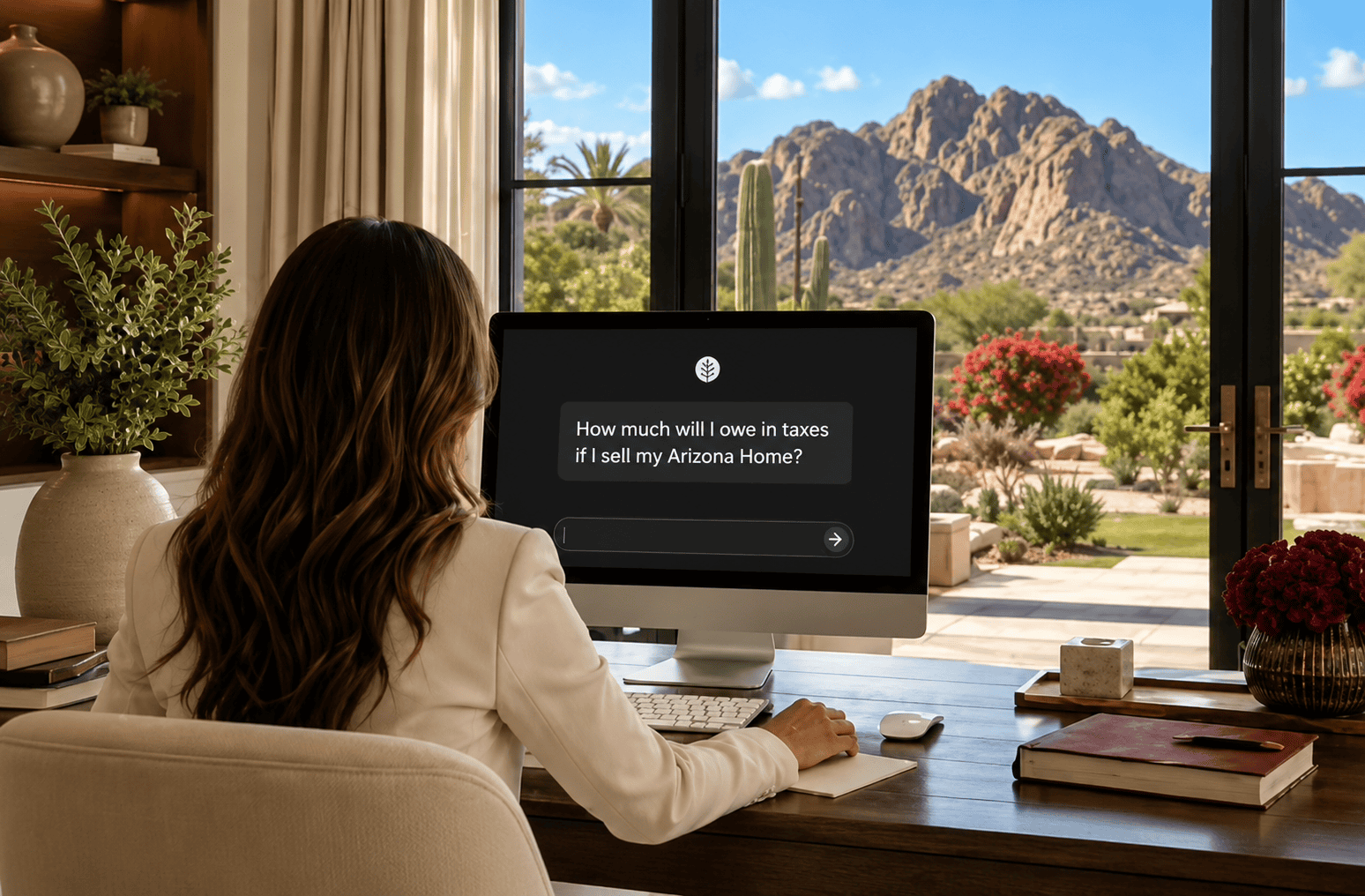
  • How Much Capital Gains Tax Do You Owe When Selling Your Arizona Home?

    How Much Capital Gains Tax Do You Owe When Selling Your Arizona Home?

    The good news is that most Arizona homeowners won’t owe federal capital gains tax when they sell their PRIMARY residence. But if you’ve owned your home for many years, it’s worth understanding how the rules apply before you decide when to list.

    Many homeowners who sell don’t owe federal capital gains tax because the IRS exclusion shields up to $250,000 in profit for single filers and $500,000 for married couples filing jointly.  But if you live in Scottsdale, Paradise Valley, Arcadia, or neighborhoods known for luxury real estate and your home has appreciated significantly, gains above that threshold are taxable.  

    If you bought your home a decade ago, you’ve probably done well. Home values across much of Metro Phoenix have more than doubled since 2013. A home purchased for $600,000 might be worth $1.3 million or more today.  That’s a $700,000 gain, and once you subtract the federal exclusion, a meaningful chunk of it may be taxable.

    The Federal Exclusion and Where It Runs Out

    To qualify for the $250,000 in capital gains from the sale of your primary home if you’re single, or $500,000 if you’re married filing jointly, you must have:

    • Owned the home for at least two of the last five years
    • Used it as your primary residence for at least two of the last five years

    If you meet both criteria, the exclusion applies automatically.  But in the luxury market, the exclusion often doesn’t reach far enough.

    Say you bought a home in Paradise Valley in 2010 for $900,000. You’ve put $75,000 into improvements over the years.  These increases to your cost basis matter. You’re selling now for $2.4 million. Your adjusted gain is roughly $1.425 million. After the $500,000 married exclusion, $925,000 is taxable.

    One of the best things you can do before you list: pull together documentation of every capital improvement you’ve made. Every renovation, addition, or major system replacement increases your adjusted basis and reduces your taxable gain. Keep the receipts, and discuss with your CPA before you set a list date.

    What Arizona Charges and a Bill That Could Change the Picture

    Arizona taxes capital gains as ordinary income at a flat 2.5% state rate. As of January 1, 2026, the state expanded a 25% long-term capital gains subtraction to apply to all long-term gains, which drops the effective Arizona rate on qualifying gains to approximately 1.875%.

    That’s meaningfully lower than most states. Arizona also has no state transfer tax unlike California, New York, or most Northeastern states, which is one of several reasons selling here is less costly than sellers coming from those markets often expect.

    Arizona SB 1633

    The Arizona Senate passed this bill in early 2026 on a 16-12 vote. It would create an unlimited state exemption on home sale gains for sellers who’ve owned their primary residence for at least five years, meaning zero Arizona state capital gains tax, regardless of how much the home has appreciated.

    If it becomes law, the effective date would be 2027.

    As of April 2026, SB 1633 still needs to clear the Arizona House and be signed by the governor. It faces political opposition.  Critics argue it disproportionately benefits high-income sellers but it has passed one chamber. If you’re planning a sale later this year or into 2027, the timing of your closing could matter depending on where this bill lands.

    What This Means for Your Net Proceeds

    Capital gains tax is one of the easiest costs to overlook when estimating your net proceeds. Most sellers focus on commissions, title and escrow fees, recording costs, and paying off their mortgage. In Arizona, those expenses typically total 8–10% of the sale price. But for homeowners with gains that exceed the federal exclusion, capital gains tax can surpass every other closing cost combined.

    Whether you’re considering selling in a lower-income year, evaluating how a potential 2027 closing could affect your taxes if SB 1633 becomes law, or simply want a clearer picture of what you’ll actually net, it’s worth running the numbers before you list. A pre-listing consultation lets us evaluate your specific situation so you can make informed decisions before you’re committed to a timeline.

    Frequenty Asked Questions

    Do I always have to pay capital gains tax when selling my house in Arizona?

    Not necessarily. If your profit falls within the federal exclusion — $250,000 for single filers and $500,000 for married couples filing jointly — you won’t owe federal capital gains tax. You’ll also likely owe no state capital gains tax since Arizona’s rate applies to the same gain. Many sellers in average-priced markets won’t owe anything. In Scottsdale and Paradise Valley, where long-time homeowners often have gains well above those thresholds, it’s a different conversation.

    What’s the difference between the federal exclusion and the actual capital gains tax rate?

    The exclusion is the portion of your gain that’s completely tax-free. Any gain above it is taxable. Federal long-term capital gains tax rates run 0%, 15%, or 20% depending on your income. High earners often face the 20% rate plus a 3.8% Net Investment Income Tax. Arizona’s effective rate on long-term gains is approximately 1.875% as of 2026.

    What is Arizona SB 1633 and when does it take effect?

    SB 1633 is a bill passed by the Arizona Senate in early 2026 that would eliminate state capital gains tax on primary home sales for sellers who’ve owned their home for at least five years. As of April 2026, it still needs to clear the Arizona House and be signed by the governor. If passed, it would take effect in 2027. It’s pending, not law, but worth tracking if you’re planning a sale this year or next.

    How do home improvements affect my capital gains tax when selling in Arizona?

    Improvements increase your cost basis, which reduces your taxable gain. If you bought a home for $800,000 and put $100,000 into renovations, your adjusted basis is $900,000. On a $1.5 million sale, your taxable gain is $600,000 rather than $700,000. Keep records of every capital improvement — they can meaningfully reduce your tax bill.

    Should I wait until 2027 to sell if Arizona SB 1633 passes?

    That depends on your full financial situation. If your gain above the federal exclusion is substantial, waiting one year could save a meaningful amount in state capital gains tax. But the bill isn’t law yet, and your carrying costs, market conditions, and personal timeline all factor in. It’s worth modeling both scenarios with your agent and CPA before committing to a list date.

    If you’re planning to sell your home and want to understand the full financial picture – not just what it might sell for, but what you’ll actually walk away with after closing costs and estimated tax exposure – schedule a consultation at kristabecka.com/contact. I’ll prepare a personalized net proceeds analysis and help you evaluate your options so you can make informed decisions with confidence.

  • Why Summer Might Be the Best Time to Buy a Home in Scottsdale

    Why Summer Might Be the Best Time to Buy a Home in Scottsdale

    Summer may be one of the best times to buy a home in Scottsdale. Many buyers overlook it because they’re following conventional wisdom from other markets. Active buyer demand drops 40–50% from its spring peak as seasonal residents leave and many local buyers postpone their search until fall. The result is less competition, more negotiating power, and sellers who are often more willing to negotiate on price, credits, and concessions. Buyers who purchase between June and August frequently secure better terms than those who wait for the fall rush.

    If you’re a luxury home buyer, you’ve probably heard it’s best to wait until fall when the weather cools down and there’s more inventory.

    Here’s what that advice misses: right now, in June, your competition just got on a plane.

    Scottsdale’s real estate market runs on a rhythm most buyers from out of state aren’t aware of.

    Why Summer Is Different in Scottsdale

    Most real estate markets slow down in winter. Scottsdale is the opposite.

    The peak buying season here runs from late January through May. That’s when snowbirds are making final decisions before heading north, when relocation buyers are timing their moves, and when luxury demand peaks across North Scottsdale, Paradise Valley, and Arcadia. Multiple offers, quick closes, and minimal negotiating room are the norm during that stretch.

    Then summer arrives, and the market begins to change.

    Seasonal residents have returned to Chicago, Seattle, Toronto, and other cooler climates. Many second-home buyers pause their searches, and local buyers often decide to wait until fall when temperatures become more comfortable. As buyer activity slows, listings that didn’t sell during the spring market remain available, and sellers begin watching their days on market increase.

    That’s when the balance of power begins to shift. For buyers willing to look past the triple-digit temperatures, that shift can create opportunities that are much harder to find during Scottsdale’s peak spring market.

    What You Can Actually Negotiate Right Now

    The practical advantages break down by price point.

    Under $1.5M: This tier still has pockets of competitive demand, but it’s not the frenzied multiple-offer environment of spring. Well-priced homes move in 2–3 weeks; overpriced ones are sitting. If a home has been on the market since April, the seller’s motivation has changed considerably. You have room to ask for repairs, credits, and seller concessions on terms they would have laughed at five months ago.

    $2M–$5M: Above $2 million, multiple-offer situations are rare even in spring. In summer, you’ll often be the only offer a seller sees for weeks. The 114-day average days-on-market in Paradise Valley in spring 2026 tells you how patient you can afford to be — and how motivated sellers get once that number climbs higher. The sale-to-list ratio in the luxury tier runs around 94–95%, but buyers who work the summer window have reported significantly better outcomes, particularly on homes with repositioned pricing.

    $5M+: The ultra-luxury tier in Paradise Valley essentially has no comparable spring vs. summer distinction — these homes always require the right buyer, and that buyer doesn’t operate on a seasonal calendar. But discretely positioned listings that agents know about and aren’t yet public can surface during the quiet months. This is where having an agent with active relationships in the market matters more than timing.

    The Practical Advantages No One Talks About

    Beyond price negotiation, summer buying in Scottsdale gives you something money can’t fully replicate: time.

    In summer, the clock slows. You have room to:

    • Take your time evaluating homes instead of making rushed decisions.
    • Do a second or third showing on your top choices to make sure you’re right about the home
    • Wait for the right property instead of panic-buying the second-best option because the first one sold in a weekend
    • Get contractor opinions without feeling pressured.

    There’s also a practical due-diligence benefit specific to Arizona: touring in summer tells you how the home actually performs. You’ll quickly find out whether the HVAC keeps the home comfortable at 110°F, whether a west-facing backyard is enjoyable in the evening or becomes a heat trap, and how well the windows and insulation perform under peak summer conditions, insights you simply can’t get during a comfortable April showing. If you ever plan to sell, those performance characteristics will matter to the next buyer too.

    The Risk to Know About

    The summer advantage isn’t without a caveat worth understanding.

    In some sub-markets, particularly Paradise Valley’s ultra-luxury tier, listing supply can tighten in June and July as sellers pull homes rather than sit through a slow summer with no action. This can temporarily shift leverage back toward the few sellers still active.

    The response to this risk isn’t to wait it out. It’s to expand your visibility. The buyers who win in the summer market aren’t just watching Zillow. They’re working with agents who know which listings are coming, which sellers in desirable neighborhoods have quietly started conversations, and which properties didn’t hit the MLS because the owner wanted a discreet process. In a thin summer market, off-market and coming-soon inventory is often where the best opportunities sit.

    This is one reason why having the right representation matters more in summer than it does in spring. When the market is loud and competitive, most agents can find you inventory. When it’s quiet, the ones with real network access pull away from the field.

    Frequently Asked Questions

    Is summer a good time to buy a home in Scottsdale?

    Yes, summer is one of the most strategically advantageous times to buy in Scottsdale. Active buyer counts drop 40–50% from spring peaks as seasonal residents leave and many local buyers postpone until fall. That reduced competition translates to more negotiating power and more time for due diligence.

    Do home prices drop in Scottsdale in summer?

    Prices don’t dramatically drop, but sellers are meaningfully more willing to negotiate. You’ll find more acceptance of repair requests, closing cost credits, and rate buydowns. Price reductions are more common on homes that have been listed since spring. In the luxury tier ($3M+), summer can produce real price movement on homes that didn’t trade at the spring ask.

    What are the risks of buying a home in Scottsdale in summer?

    The main risk is that listing supply can temporarily tighten in some sub-markets as sellers pull homes rather than sit through a slow summer. This is most common in Paradise Valley’s luxury tier. Work with an agent who tracks off-market and coming-soon inventory so you’re not limited to what’s publicly active on the MLS.

    When do most buyers return to the Scottsdale market after summer?

    Activity typically picks up again in October, and by late January the market is running at full spring pace. Snowbirds, relocation buyers, and local upgraders all compete simultaneously. Buyers who purchase in June through August avoid that surge entirely and often close well before the fall rush begins.

    How hot does it get in Scottsdale in summer?

    Temperatures regularly exceed 110°F in June through August. The upside is that touring in extreme heat gives you real-world data on how the home’s HVAC, insulation, and orientation perform under maximum demand.


    If you’re wondering whether this summer is the right time to buy, don’t assume waiting until fall is your best option. Every neighborhood and price point behaves a little differently, and timing should always be evaluated alongside your goals and budget. If you’d like to discuss what’s happening in your target neighborhoods, schedule a consultation and let’s find out what’s negotiable.


    About Krista
    Krista Becka helps buyers and sellers throughout Scottsdale, Arcadia, Paradise Valley, and Greater Phoenix make confident real estate decisions. For nearly two decades she’s guided move-up buyers and sellers, relocation clients, and investors, protecting equity and helping clients avoid costly mistakes. A Broker Associate with Real Broker, Certified Luxury Home Specialist, REAL Luxury member, and Certified Negotiation Expert, Krista blends data-driven pricing with hyperlocal insight and concierge-level service. Thinking about buying or selling in Scottsdale? Connect with Krista at kristabecka.com.