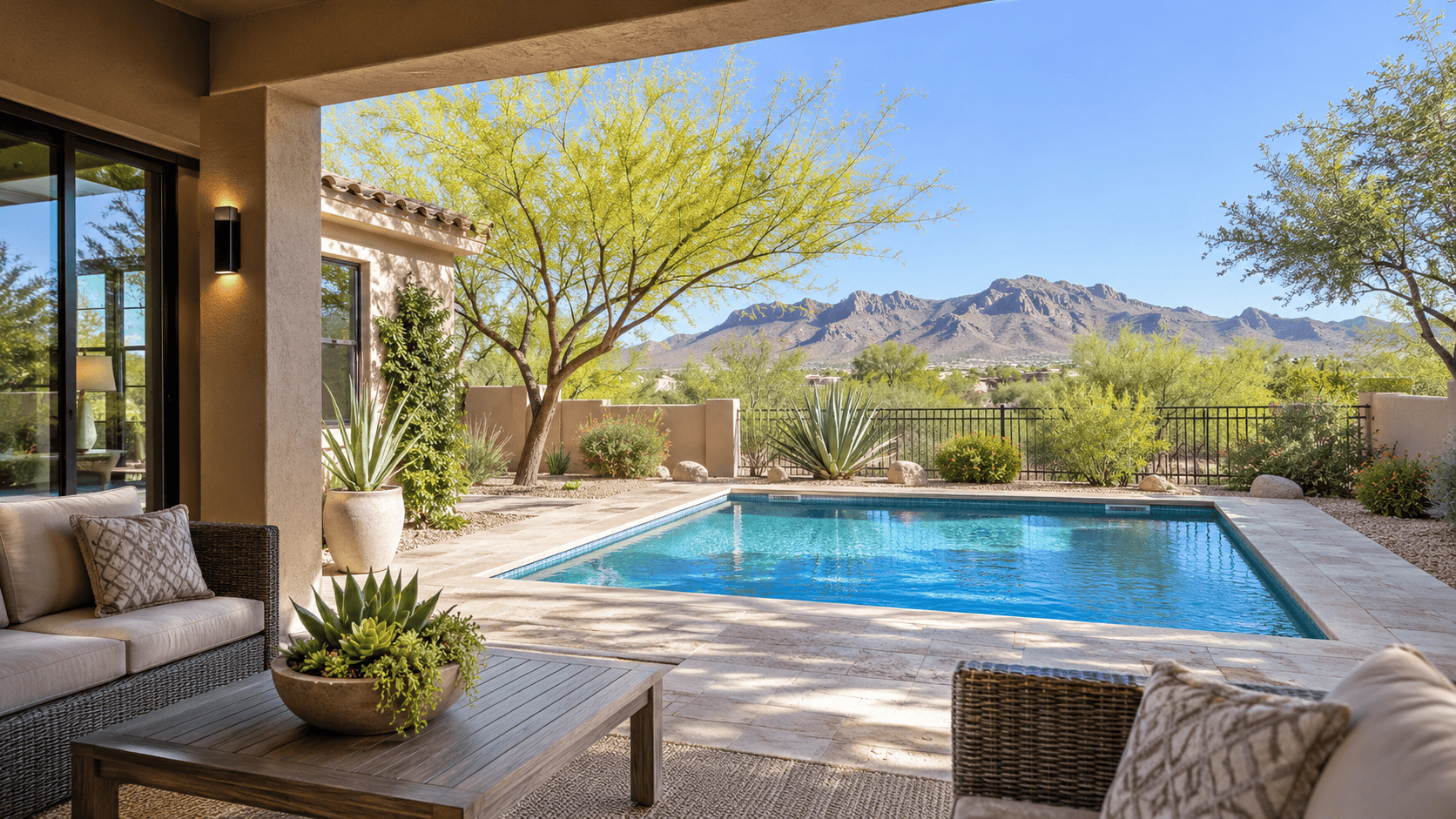
What should you check before buying a Scottsdale home with a pool?
Hire a dedicated pool inspector in addition to your general home inspector. The standard home inspections often don’t cover pool equipment, plumbing, or the shell. Do it inside Arizona’s 10-day inspection period, budget roughly $125–$250 for a typical pool (more for larger pools with spas and water features), and use the findings to request repairs or credits. Then price the ongoing carrying cost before you fall in love with the backyard.
By Krista Becka, REALTOR® and Broker Associate | November 3, 2026
In Scottsdale, a pool isn’t a bonus feature. At $1M and above, it’s closer to an expectation, and that’s exactly why buyers skip the homework. The pool looks clear, the water’s blue, and the inspection report on the rest of the house comes back clean. Then the first summer electric bill lands, or the heater quits in November, and the “dream backyard” becomes expensive.
Buyers ask me some version of this: what do I actually need to check on a pool, and what’s it going to cost me? Here’s how I walk clients through it.
What a standard home inspection often misses
A general home inspection is built around the house. Many inspectors treat the pool and spa as a separate system and only give it a quick visual look. Read the scope in your inspector’s agreement before you assume anything is covered. Don’t assume it’s covered because the report has a “pool” line.
A dedicated pool inspection typically looks at:
- Equipment operation: pump, filter, heater, and automation or controls
- Leaks: plumbing, return lines, skimmers, and equipment connections
- The shell and finish: plaster or pebble condition, tile, and coping
- Circulation: whether the water actually moves the way it should
- Electrical safety: grounding and bonding, plus the condition of junction boxes
- Safety features: barriers, gates, and drain covers
Ask for a leak evaluation if there’s any sign the water level drops faster than normal evaporation would explain. In the Phoenix-area summer heat, evaporation is real, so you want an expert separating “normal desert loss” from “there’s a crack somewhere.”
One more thing worth saying plainly: an inspection tells you the condition on the day it’s performed. It won’t tell you what’s buried, hidden, or never disclosed. Arizona sellers have to disclose known material facts, so read the SPDS (Seller’s Property Disclosure Statement) carefully, and ask pointed questions about the pool’s repair history, equipment age, and any resurfacing.
What it costs: the repair side and the ownership side
Here are the ranges I see quoted around the Valley. They vary by pool size, equipment, and contractor, and a $2M+ backyard with a spa, water features, and automation sits at the high end or above, so treat these as a starting point rather than a bid.
Common repair and replacement costs:
- Pool heater replacement: roughly $1,500–$6,000 or more
- Pump repair: roughly $150–$800; full pump replacement runs roughly $800–$2,800
- Resurfacing the interior finish: roughly $5,000–$15,000 depending on the finish
- Full remodel with new finish, tile, and coping: often $15,000–$25,000 and up
Ongoing ownership costs:
- Weekly professional service: commonly $90–$300 a month, depending on what’s included
- Chemicals and pump electricity: budget a few hundred dollars a month in peak season
- Annual all-in carrying cost, including equipment reserves: published estimates run from about $3,000 to $7,000 a year for a typical home pool
If the inspector tells you the pump is original to a 15-year-old pool, that’s not a deal-killer. It’s a negotiating point and a line in your budget. And if the finish is near the end of its life, that’s a five-figure item you can ask the seller to address through a credit. Which brings us to the timeline.
Use the inspection period, and use it well
In Arizona, your inspection window is generally 10 days from contract acceptance, unless your contract says otherwise. That clock covers the house, the pool, the roof, the HVAC, and the sewer scope all at once, so book the pool inspector the day you go under contract. The short version of how the BINSR works is this: your inspection findings go on the Buyer’s Inspection Notice and Seller’s Response, and the seller can agree to repairs, offer credits, or decline. You then decide whether to move forward, renegotiate, or cancel within your contract rights.
A few things to know about how this plays out with pools:
- Safety items can be non-negotiable. Arizona’s pool barrier law (A.R.S. § 36-1681) sets requirements for enclosures: at least 5 feet high, self-closing and self-latching gates that swing away from the pool, and no gaps a 4-inch sphere can pass through. Pools and barriers built before the law took effect are exempt from the state statute, but local jurisdictions can have their own rules, and lenders or insurers may care. Confirm what applies to your specific property.
- Credits are often better than repairs. A seller-ordered repair by the cheapest contractor isn’t always what you want on equipment you’ll live with for a decade. Many of my buyers prefer a credit and their own vendor.
- Ask about insurance early. A pool can change your homeowner’s liability needs. Get a quote before your inspection period ends, not after.
- Sellers must provide a pool safety notice. Arizona requires a Department of Health Services pool safety notice when a home with a pool is sold, so expect to see it in your paperwork.
If you’re thinking about the seller’s side of this equation, the same logic applies in reverse. A pre-listing look at the equipment can take the surprise out of the negotiation, which I cover in Pre-Listing Home Inspection: Is It Worth It? And if you’re deciding whether to put money into a backyard before you sell, my breakdown of home upgrades that add value and the ones that don’t will help.
The decision most buyers skip: do you want this pool?
Inspection answers “what’s wrong with it.” It doesn’t answer “is this the right pool for how I’ll live?” Before you commit, run three checks:
- Total cost of ownership. Add the monthly service, utilities, and a yearly reserve to your housing budget. At a $1M+ price point the pool’s carrying cost rarely changes whether you can afford the house, but it does change what’s left for the renovation you were planning.
- Age and style of the equipment. Newer variable-speed pumps and efficient heaters cost less to run. An older setup might be cheap to buy and expensive to operate.
- How you’ll use it. A pool you swim in six months of the year is a different asset from a pool you look at. If you’re relocating from out of state, the first summer is a real test.
Here’s the part the listing photos don’t show: two homes with identical square footage and lot size can have very different bills coming due on the backyard over the next five years. That’s information you want before you write the offer, not after.
Frequently Asked Questions
Does a regular home inspection in Arizona include the pool?
Often not in any depth. Many inspectors treat the pool and spa as a separate system or limit the review to a visual check, so ask for a dedicated pool inspection and read your inspector’s scope of work before you rely on it.
How much does a pool inspection cost in Arizona?
A typical residential pool inspection runs roughly $125–$250. Larger pools, spas, water features, and complex automation can push that higher, which is common on luxury properties in Scottsdale and Paradise Valley.
Can I ask the seller to fix pool problems after the inspection?
Yes. Use the BINSR to request repairs or credits for items found during your inspection period. The seller can accept, counter, or decline, and you decide whether to proceed or use your contract cancellation rights.
Are Arizona pool fences and gates required by law?
Arizona’s pool barrier statute, A.R.S. § 36-1681, sets requirements for barriers around pools at least 18 inches deep and wider than 8 feet, but pools built before the statute took effect are exempt. Local rules can differ, so verify what applies to the specific property.
How much does it cost to own a pool in Scottsdale each year?
Published estimates for a typical Arizona home pool run from about $3,000 to $7,000 a year once you include service, chemicals, electricity, and an equipment reserve. Larger, more complex luxury pools can run higher.
Buying a home with a pool in Scottsdale comes down to three moves: inspect the pool separately, use the inspection period to negotiate, and price the ownership costs before you commit. If you’re weighing a specific property and want a second set of eyes on the backyard, the paperwork, and the numbers, schedule a consultation at kristabecka.com/contact — I’m happy to walk you through it.
About Krista Becka
Scottsdale Realtor Krista Becka helps buyers and sellers across Scottsdale, Arcadia, Paradise Valley, and Greater Phoenix make confident moves. For nearly two decades she’s guided move-up buyers and sellers, relocation clients, and investors, protecting equity and helping clients avoid costly mistakes. A Broker Associate with Compass, Certified Luxury Home Specialist, Relocation Specialist, and Certified Negotiation Expert, Krista blends data-driven pricing with hyperlocal insight and concierge-level service. Connect with Krista at kristabecka.com
Equal Housing Opportunity. This post is general information, not legal, tax, or insurance advice. Verify requirements and costs for your specific property.
Leave a Reply